THE NATIONAL REVIEW, October 8, 1963
by Guy Davenport
From ”The Multiple Man”
In A Vision, that curiously beautiful folding together of Irish shrewdness and the occult buncombe of Madame Blavatsky’s back rooms, William Butler Yeats identifies in a gallery of human types The Multiple Man, “also called the Hunchback.” This is a man blasted by fate from the beginning and stamped with an inexplicable sign, goiter or clubfoot or conspicuous portwine stain. Like a Sicilian with the mal occhio who dries up a mother’s milk or brings down chandeliers with his mere presence, or the albino who can divine water, the afflicted man in our midst is likely to become a mythological beast, commanding both fear and respect. Enigma or pariah, to assert himself normally he must penetrate humanity’s childish and primitive interest in his deformity. Public hangman; the possessor of a grotesque Adam’s apple; a man locked in a cellar all of his childhood and turned loose, with all the advantages of a moron, in a European city—these are the subjects of three new novels that look at the world through the eyes of the touched, the set-aside.
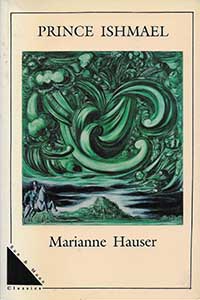
Marianne Hauser (Mrs. Frederic Kirchberger of Kirksville, Missouri) has taken the legend of Casper Hauser (no kin) for the theme of her third novel. “In the year 1828, on the second day of Pentecost,” she notes in an Afterword, “there appeared from the shadows of Nuremberg’s ancient town gate a figure darkly mysterious, and legendary, you might say, upon the very moment of his entrance. For although he was normally grown, a boy of sixteen perhaps, he yet had not learned to talk or walk properly, or hate or love, or tell the face of a stone from the face of his neighbor.” Prince Ishmael chronicles in first-person narrative the brief awareness of this world that Casper Hauser sustained in his short life. As if reason and even sophistication were thrust upon an idiot, the mind of Casper had suddenly to absorb the ways of civilization. A professor undertakes to educate him; he memorizes the Muses, the planets, the Latin cases, until we realize that the contents of minds, of schoolrooms, of newspapers, are a glorious trash and that the discrimination of its parts, item by item, is an undertaking which we manage as badly perhaps, certainly as blindly, as Casper Hauser.
A man without a past soon acquires as many as suspicion and imagination can attach to him. That is why Herman Melville’s confidence man supplies a conscious theme to Prince Ishmael, which—look at its title—bears other Melvillean tones. Casper Hauser became, in turn, all lost sons, a murdered prince, a noble savage, Adam just out of his paradise of innocence, I’homme naturel at last. He was collected by savants, lionized by society, denounced by the police, reported on by spies. Had he been raised in a cellar, in a cave? Was he a victim of amnesia, the falling sickness? Or was he a waif clowning his way through a fraud? What indeed, this remarkable novel asks, is man? Why should he, without identity or credentials, without a name or history, throw Europe into an uproar and stick in the imagination ever since?
With a richness and color wholly alien to the novel in America, Marianne Hauser constructs a myth close to music in its power to move the reader from one dazzling passage to the next:
I heard the rain of the leaves falling, the horse chestnuts splitting and falling. The roofs of the town were swinging in nets of light, and in the glassy sky the migratory birds were rehearsing daily for their long journey south. The storks would fly as far as Egypt, [the professor] explained, touching briefly upon the pyramids and Joseph’s dreams. Was that Joseph another police inspector? Ah, I had much to learn, my teacher found. This was my first autumn.